5X Registrations this year: This is the biggest summit focussed on ‘Implementing AI in Healthcare’
Why GDHS 2026 registrations are growing fivefold as healthcare leaders prepare to adopt AI through practical demonstrations and global expertise.
by Dr. Rajendra Pratap Gupta
August 30, 2026
8 min read
Healthcare Is Moving to AI-First. The Question Is: Will You Move With It?
Something unusual is happening at www.globalsummit.health. Registrations for the Global Digital Health Summit 2026 are running at five times the response we have ever recorded, and award submissions have grown at a similar pace. Phase Three registrations have now closed, while the final registration fee is likely to cross last year’s ₹100,000. The VIP Gold Pass has also seen the strongest demand in the history of the Summit. These numbers are not merely about registrations; they are a signal that healthcare professionals are beginning to recognise that AI is no longer a subject to understand someday. It is rapidly becoming part of the operating reality of healthcare. The www.globalsummit.health has a record of brining the best of global leaders to India. That’s why people from all over the global converge to this summit. We do mean what we say- Help you become AI First!
Two Days That Could Decide Which Side of the AI Divide You Are On
On 20–21 November 2026 at Bharat Mandapam, New Delhi, doctors, clinic owners, hospital promoters, healthcare executives, entrepreneurs and technology leaders will gather for something designed to go far beyond another gathering about artificial intelligence.
The purpose of GDHS 2026 is to help participants move from curiosity to capability. Most conferences show what AI might do in the future; GDHS 2026 is being built around what healthcare leaders must know, understand and begin applying immediately after the Summit.
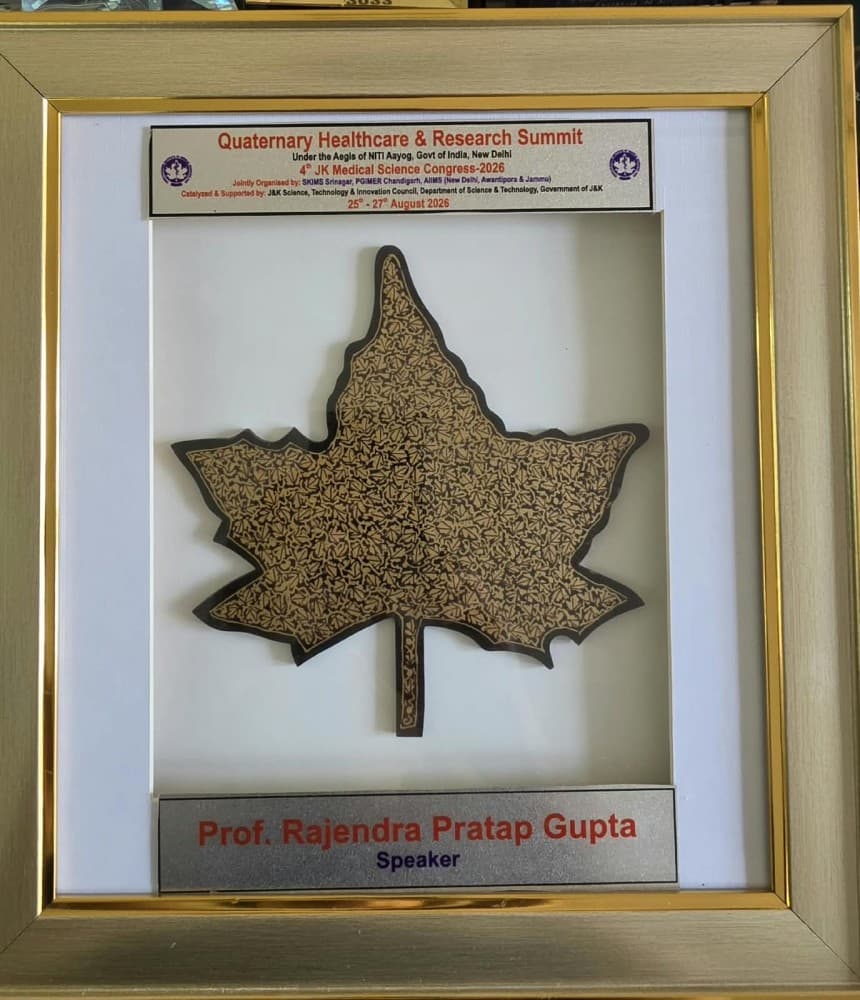
On August 27th, I delivered a keynote address at the Quarternary Healthcare & Research Summit, organized by under the auspices of NITI Aayog Official . During my presentation, a senior physician inquired about the most suitable AI solution for her speciality. The summit aims to provide an answer to this question. Participants will delve into the intricacies of AI, examining its functionality, areas of potential failure, the paramount importance of maintaining clinical judgment, and the delineation of safe adoption boundaries. Concurrently, they will gain insights into the extensive applications of AI across various domains, including diagnostics, clinical decision support, documentation, patient engagement, revenue cycle management, research, hospital operations, and healthcare delivery. The objective is not to impart a comprehensive vocabulary of AI concepts but to equip attendees with a nuanced understanding of its appropriate application, implementation strategies, and its capacity to generate tangible value in practical settings.
Very soon, knowing about AI will not be a differentiator. Not knowing how to use it will be a disadvantage.
While Some Are Still Discussing AI, Others Are Already Deploying It
We are bringing leaders from the United States, Israel, Europe and other leading healthcare ecosystems from across the globe, who have already deployed AI in real clinical environments. These are not laboratory experiments, polished demos or carefully scripted proofs of concept. They are implementations involving real patients, real clinicians, real budgets, real workflows and real accountability.
Would you like to meet a global leader who deployed a solution where 300,000 prescriptions are changed by AI every month ? Yes, this global leader will meet you at the summit !
The value of these conversations lies in what is usually left out of public presentations. These leaders will share what worked, what failed quietly, what cost far more than expected, what they would never do again and what they learned only after putting AI into the hands of clinicians and healthcare teams. For a hospital promoter, clinic owner, doctor or healthcare entrepreneur, this kind of knowledge could save years of experimentation and prevent costly technology decisions that look impressive in a presentation but fail in practice.
Your Competitor May Already Be Learning What You Are Still Postponing
There was a time when digital health was optional. Then electronic records became mainstream, telemedicine accelerated and digital public infrastructure began reshaping access and delivery. AI is compressing that transition even faster. The clinic across the road may soon diagnose faster, the competing hospital may operate with fewer administrative layers, another physician may spend more time with patients because AI handles documentation, and another organisation may identify risks earlier, personalise care better and operate more efficiently.
The competitive question is therefore no longer whether AI will enter healthcare. It is about who will learn to use it earlier, who will integrate it better and who will understand its limitations before making strategic decisions. GDHS 2026 is being built for those who do not want to discover the future after everyone else has already adopted it.
Your competitor may be sitting in this room.
The Experiment we are doing on-stage will change healthcare delivery forever !
Three years back, we had a #Robot join us as a panelist- The GDHS was the first summit in the world to live demo a robot as a panelist! That was history. This year, we’re going all out! We’re intentionally keeping one session under wraps until the last minute. At GDHS 2026, you’re in for a treat—it’s going to be history in the making! I can’t wait to share more details with you in September! 😊 😊
The real questions will be far more important. Can AI reason like an experienced clinician? Where will human judgement remain superior? Where might AI surprise the room? What happens when experience, intuition and empathy meet computational intelligence? And perhaps most importantly, will the future belong to doctors competing with AI, or doctors who have learned how to work with it?
Whatever the outcome, this may be the session that changes the conversation on the future of medicine!
This is where the debate about AI in medicine stops being theoretical
In a the next Three Years, There May Be Two Kinds of Healthcare Leaders
The growing response to GDHS 2026 reflects a deeper anxiety and a deeper opportunity. Healthcare professionals increasingly understand that AI is not simply another technology cycle. It could alter how medicine is practised, how hospitals are managed, how patients interact with health systems, how clinical decisions are supported and even how healthcare professionals define their own roles.
A three years from now, there may be two kinds of healthcare leaders: those who began learning and implementing AI while the transition was still taking shape, and those who spent the following years trying to catch up. The safest place during a transformation is rarely on the sidelines, particularly when the transformation is moving faster than traditional institutional learning cycles.
Healthcare will not wait for you to understand AI.
Recommended Technologies for you
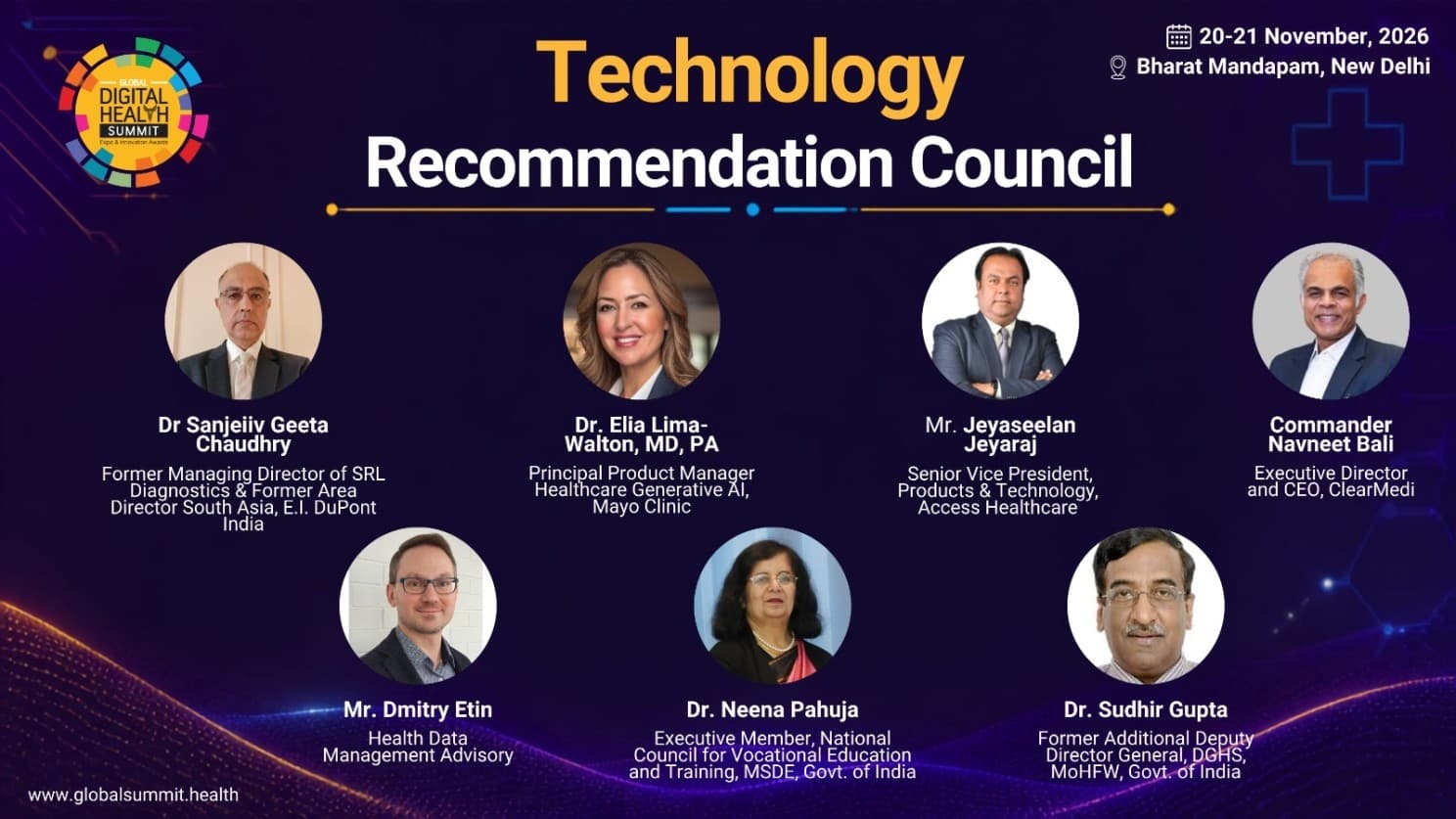
The most expensive AI lesson is often the one you learn after buying the wrong technology.
The Technology Recommendation Council (TRC) stands as the pioneering initiative of its kind globally, tasked with recommending technologies suitable for implementation by governments, hospitals, and clinicians. This recommendation process is meticulously evaluated through an objective criteria framework, ensuring that the proposed technologies are not driven by vendor-centric marketing strategies. Instead, TRC recommends “Clinical Grade AI” solutions that have undergone rigorous vetting by domain experts and end-users.
Phase Three Registrations are Closed. Be in the room, where AI is !
Phase Three registrations have now closed, and the remaining passes will move to a higher registration fee, which is likely to cross last year’s ₹100,000. Demand for the VIP Gold Pass is already at a record level. If healthcare is your profession, your business, your investment or your life’s work, this may be one of those moments when being in the room matters more than reading about what happened afterwards.
Join us on 20–21 November 2026 at Bharat Mandapam, New Delhi, and be part of the conversations, demonstrations, experiments and decisions that could shape how healthcare responds to artificial intelligence.
Register at www.globalsummit.health
GDHS 2026: Don’t come to hear about the future of healthcare. Come before the future arrives without you.
Dr. Rajendra Pratap Gupta, PhD
Architect & Founder - Functional AI Pyramid- AI Maturity Model ( Framework)
#GlobalDigitalHealthSummit #GDHS2026 #ArtificialIntelligence #AIinHealthcare #DigitalHealth #FutureOfHealthcare #HealthcareInnovation #HealthTech #DigitalTransformation #FutureOfMedicine #HospitalOfTheFuture #ClinicianOfTheFuture #HealthcareLeadership #MedicalAI #GenerativeAI #AgenticAI #HealthcareTransformation #AIAdoption #HealthInnovation #BharatMandapam #GDHS2026 #GlobalDigitalHealthSummit #AIinHealthcare #DigitalHealth #FutureOfHealthcare #HealthcareInnovation #FutureOfMedicine #HealthcareLeadership #MedicalAI #HealthTech Global Digital Health Summit, Expo & Innovation Awards Academy of Digital Health Sciences
Share this article
Pass it along to a colleague in healthcare or digital health.
Related articles
Keep exploring insights from GDHS.
Oct 04, 2026 · 7 min read
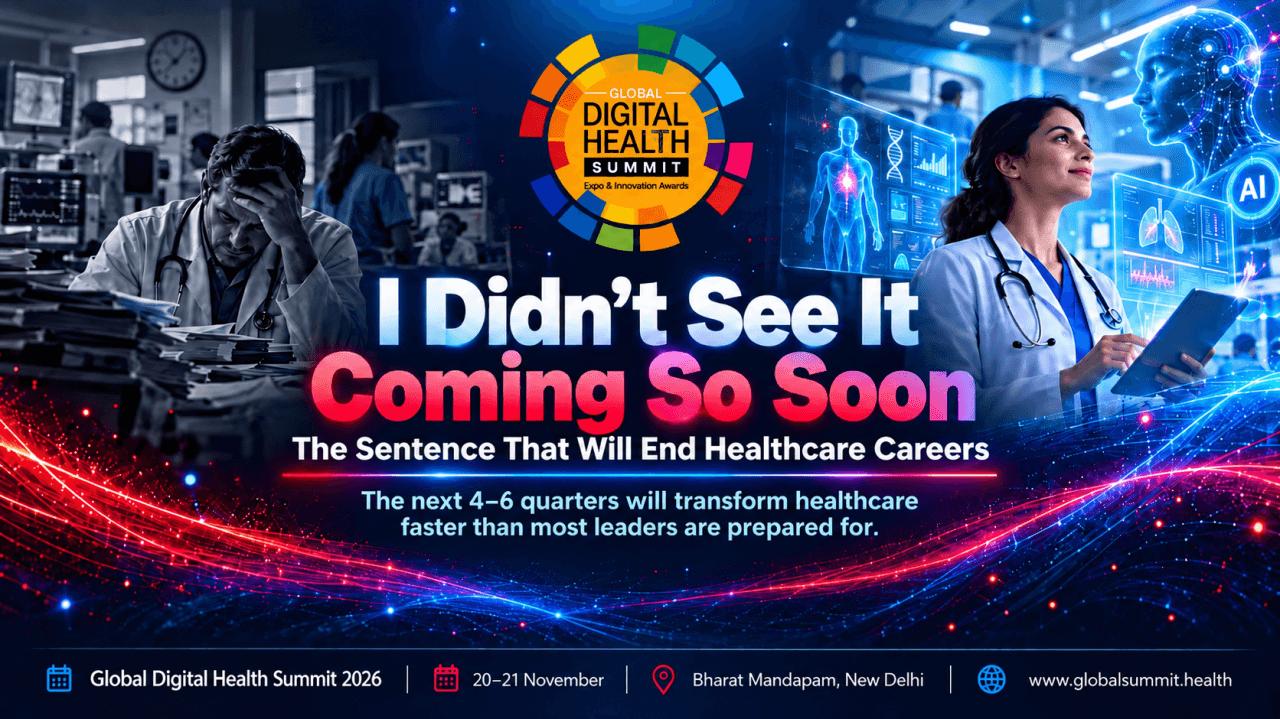
I Didn't See It Coming So Soon: The Sentence That Will End Many Healthcare Careers
Dr. Rajendra Pratap Gupta examines how rapidly advancing AI could reshape healthcare roles and why leaders need to move from discussion to implementation.
Oct 01, 2026 · 3 min read
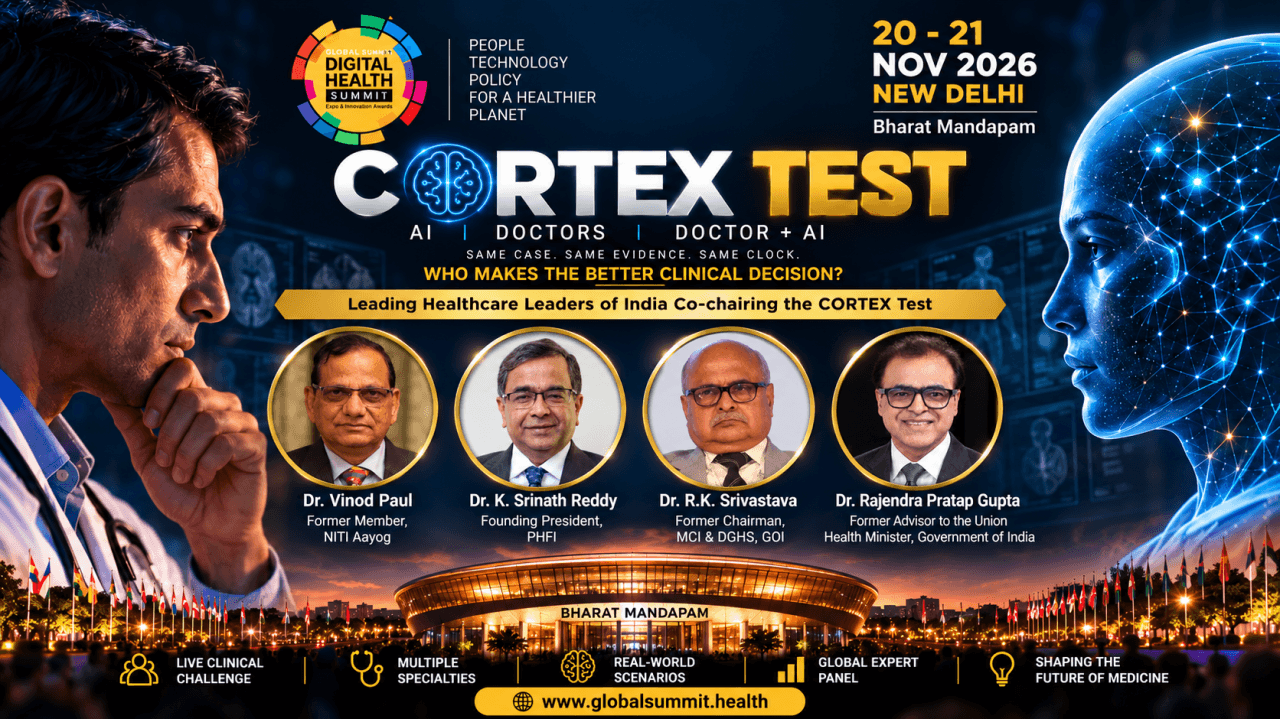
CORTEX TEST: The Day Medicine Puts AI on Trial
The CORTEX Test at GDHS 2026 compares AI, doctors and doctors using AI in a live clinical challenge across multiple specialties.
Sep 06, 2026 · 10 min read
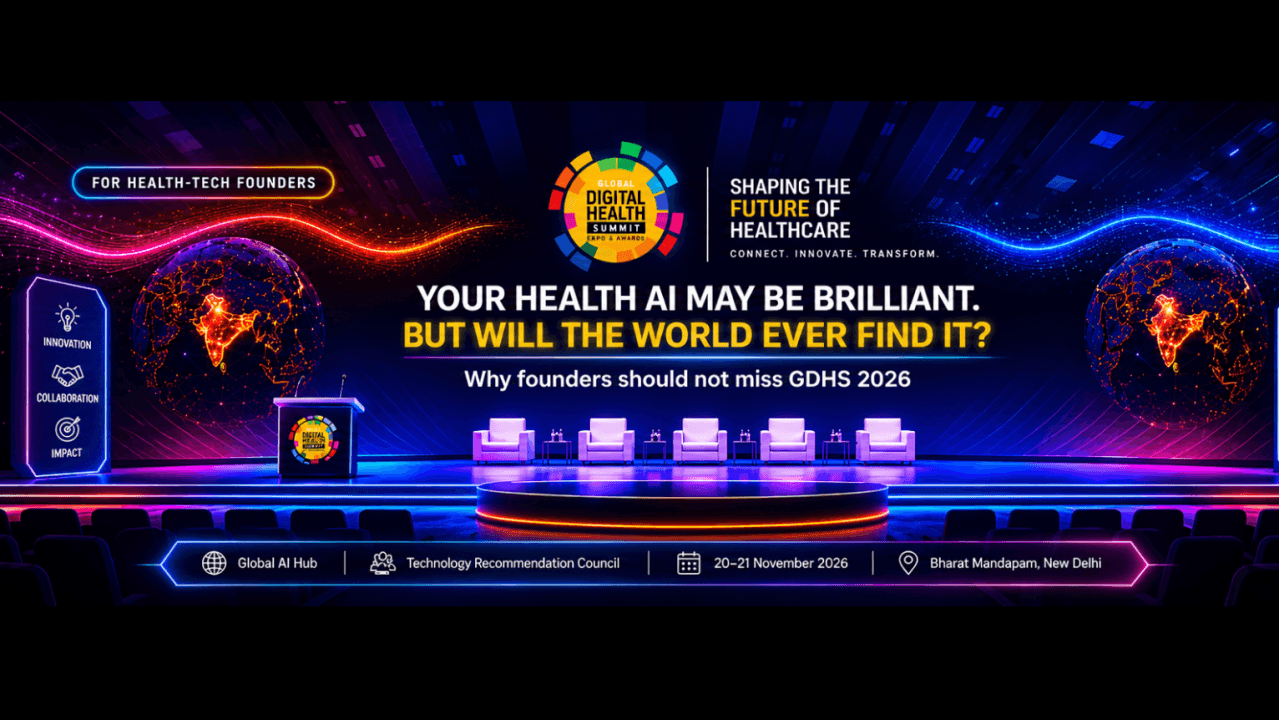
Your Health AI May Be Brilliant. But Will the World Ever Find It?
Discover how the Global AI Hub and Technology Recommendation Council connect health AI innovators with customers, clinical experts and global partners.
Aug 25, 2026 · 6 min read
List of Recommended Health AI Technologies for 2026-2027. If Your Technology Deserves Adoption, Put It to the Test
How the GDHS 2026 Technology Recommendation Council evaluates health AI technologies for adoption, credibility and real-world implementation.