Where the Future Arrives First: Why GDHS Attracts the World's Most Unconventional Healthcare Leaders
From a robot panelist to Hospital of the Future and a 9.7/10 track record — why GDHS draws leaders who challenge the status quo, and why 2026 is its boldest edition yet.
Dr. Rajendra Pratap Gupta
October 20, 20265 min read
Most healthcare conferences are built to confirm what the industry already believes and what sponsors want to show and speak about. The Global Digital Health Summit (GDHS) was built to challenge it. That single tough choice explains why, in the last four editions, it has become a magnet for leaders who question the status quo, and why its fifth edition, on 20–21 November 2026 at Bharat Mandapam, New Delhi, is shaping up to be its boldest yet.
A stage where machines take questions
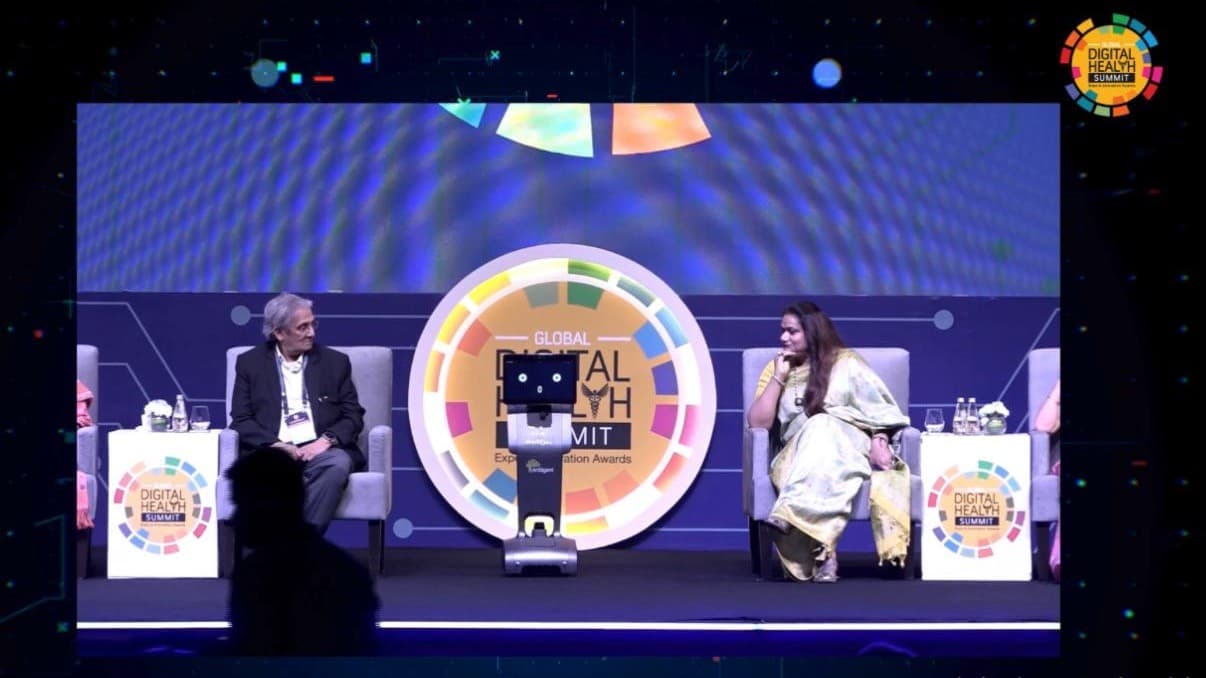
In 2024, GDHS did something few healthcare summits had dared: it seated a robot as an independent panelist. The robot was treated like any other expert, fielding questions from fellow panelists. It was not a gimmick. It was a deliberate signal that any serious conversation about the future of care must now include the technologies that will deliver it.
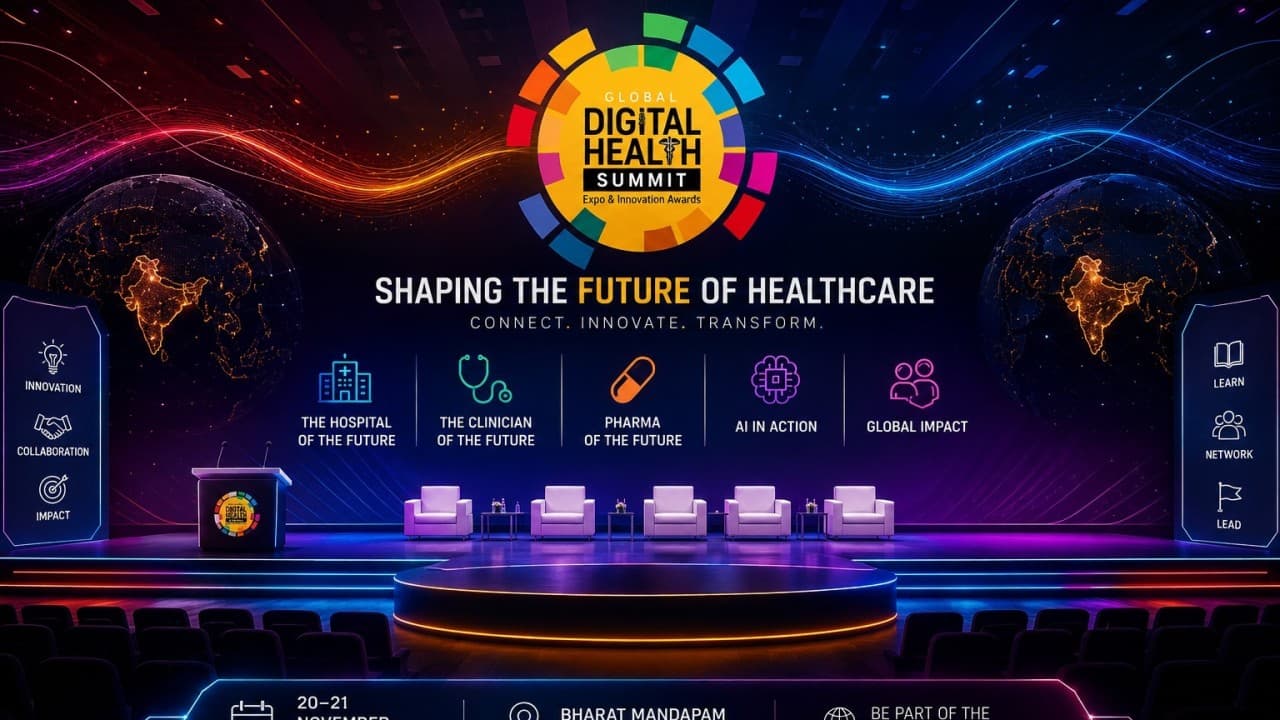
In 2026, the summit goes further. For the first time in the world, delegates will walk into a live, on-site Hospital of the Future, meet the Clinician of the Future, and experience the Pharma and MedTech of the Future — not on slides or screens, but in person. AI will take the stage not as a topic, but as a participant.
We are moving from machines that can speak to machines being tested on their ability to make independent decisions about patient care. This could be the most powerful and consequential experiment in healthcare AI yet. Yes, we will do it at GDHS in your presence. This has the potential to redefine the future of medicine — your future, too.
The founder of the Internet, on a healthcare stage
GDHS 2025 brought Dr. Vinton G. Cerf, Turing Award winner, one of the “Fathers of the Internet” and Google’s Chief Internet Evangelist, as its Chief Guest and keynote voice. The logic was unconventional but unmistakable: the infrastructure that connected the world is now the infrastructure that will heal it.
He was in remarkable company. Across its editions, the GDHS stage has hosted Nobel Peace Laureate Prof. Muhammad Yunus, who inaugurated GDHS 2024; Commonwealth Secretary-General Rt. Hon. Patricia Scotland KC; Google’s Chief Health Officer Dr. Karen DeSalvo; WHO’s Director of Digital Health Dr. Alain Labrique; the UN’s Chief IT Officer Bernardo Mariano Junior; Mayo Clinic Platform COO Maneesh Goyal; Elsevier Global Chairman YS Chi; management thinker Dr. Ram Charan; surgeon-futurist Prof. Shafi Ahmed; and even former India cricket captain Ajinkya Rahane. Few platforms anywhere bring a UN technology chief, a Nobel laureate, an Internet pioneer and a cricket legend into one conversation about health and the leadership required for its transformation.
We believe you need to be in the room, where the energy is from, about and for innovators and disrupters!
Outcomes, conclusions and not just conversations
Unconventional speakers alone do not make a summit impactful. Outputs do. GDHS 2025 launched the world’s first Functional AI Pyramid Framework for structured AI adoption, the Consortium of Innovative Healthcare Universities (CIHU), the Global Commission for 21st Century Healthcare (GC21CH), and a Hippocratic Oath for the Digital Age. It was the official pre-summit event of the AI Impact Summit 2026, backed by MeitY, the Ayushman Bharat Digital Mission, the Ministry of Ayush and the National Health Authority, with WHO as academic partners and delegates from more than 35 countries. Every edition publishes policy briefs and an outcomes report.
Delegates also leave with credentials: 24 CPD hours, 15 CNE hours and 4 CME credits at GDHS 2025, along with hands-on training to build their own AI tools.
Rated 9.7 out of 10
A five-year strategic assessment of GDHS (2022–2026), based on its track record, outcomes, partnerships and global engagement, gives the summit an overall score of 9.7/10. It earns a perfect 10 for strategic relevance and future readiness, and for speaker quality and thought leadership; 9.8 for innovation and AI leadership, for policy briefs and summit outputs, and for institution-building, with enduring initiatives such as GC21CH and CIHU; 9.7 for stakeholder diversity, global reach, government engagement and programme depth; and 9.4 for industry and commercial value.
Delegates agree. 97.6% of attendees rate GDHS “Outstanding”, every edition has sold out, and India’s Drugs Controller General, Dr. Rajeev Raghuvanshi, calls it the one healthcare summit he never misses.
2026: AI in Action
This year’s theme, Implementing Artificial Intelligence – AI in Action, answers the question every leader is now asking: not what AI could do, but how to deploy it at scale. GDHS 2026 will unleash a new wave of unconventional healthcare models, alongside a Global AI Hub, a Technology Recommendation Council that helps solution providers reach global markets, and the invitation-only CEOs’ Council for the Hospital of the Future.
Doctors, hospital executives, pharma and MedTech leaders, and anyone determined to stay ahead in the age of AI will be in the room. The only question is whether you will be among them.
20–21 November 2026 | Bharat Mandapam, New Delhi | www.globalsummit.health
If you are amongst those leaders who believe that the healthcare system needs new leadership and disruptive companies that will solve the perennial problems plaguing healthcare delivery, you have a seat in the room to be amongst those who are doing such a disruption at scale. You may be surprised to meet a global leader next to you as a delegate. This year is surpassing all our expectations.
See you on 20–21 November at www.globalsummit.health.
Share this article
Pass it along to a colleague in healthcare or digital health.
Related articles
Keep exploring insights from GDHS.
Aug 09, 2026 · 6 min read
The Only Summit Where You Walk Out With More Than Notes: Inside GDHS 2026
An inside look at GDHS 2026, from the Hospital of the Future and technology recommendations to certifications, AI success stories and collaboration.
Nov 01, 2026 · 5 min read
Discussion to a Decision - A Keynote at GDHS Could Trigger an Emergency Board Meeting
Insights that would force the industry to rewrite its strategy — why GDHS 2026 keynotes are designed to challenge hospital, pharma, MedTech and investor agendas.
Oct 09, 2026 · 4 min read
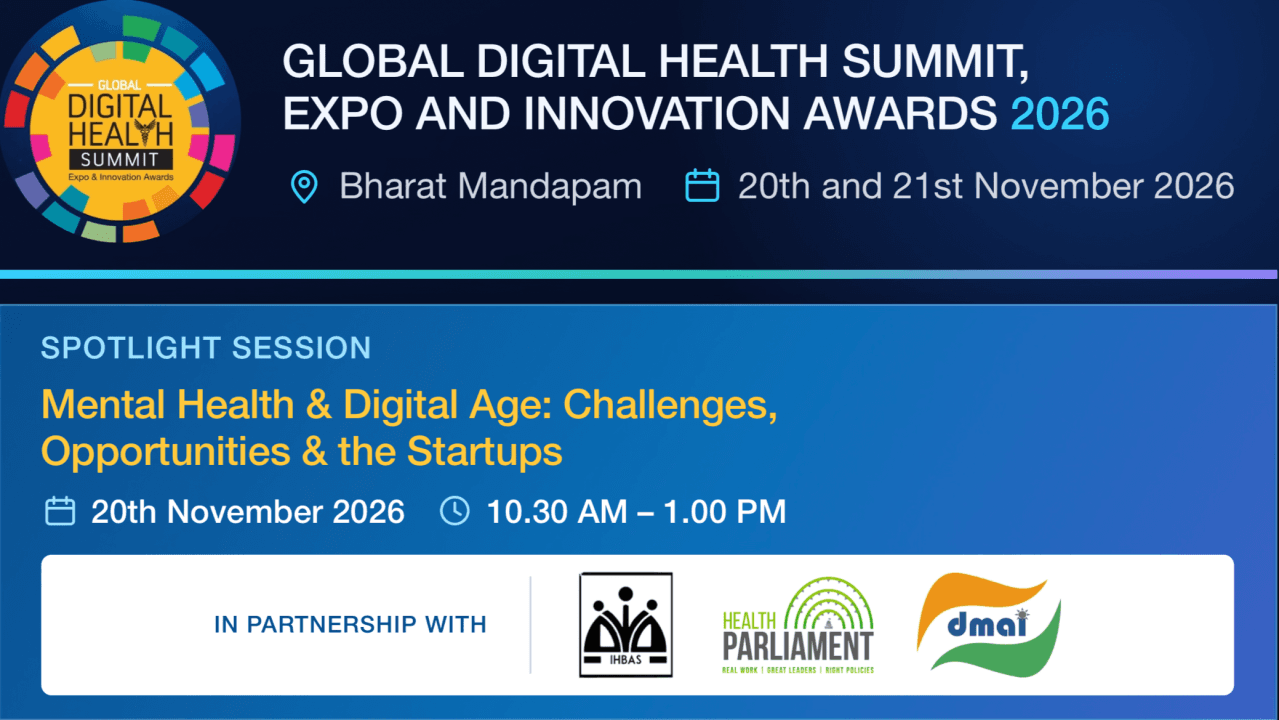
Are We Prepared for the Mental Health Emergency of the Digital Age? How can Start-ups help?
Why every healthcare CEO, pharmaceutical leader, policymaker, investor and technology innovator must rethink mental health before the digital revolution rewrites the human mind.
Oct 04, 2026 · 7 min read
I Didn't See It Coming So Soon: The Sentence That Will End Many Healthcare Careers
Dr. Rajendra Pratap Gupta examines how rapidly advancing AI could reshape healthcare roles and why leaders need to move from discussion to implementation.