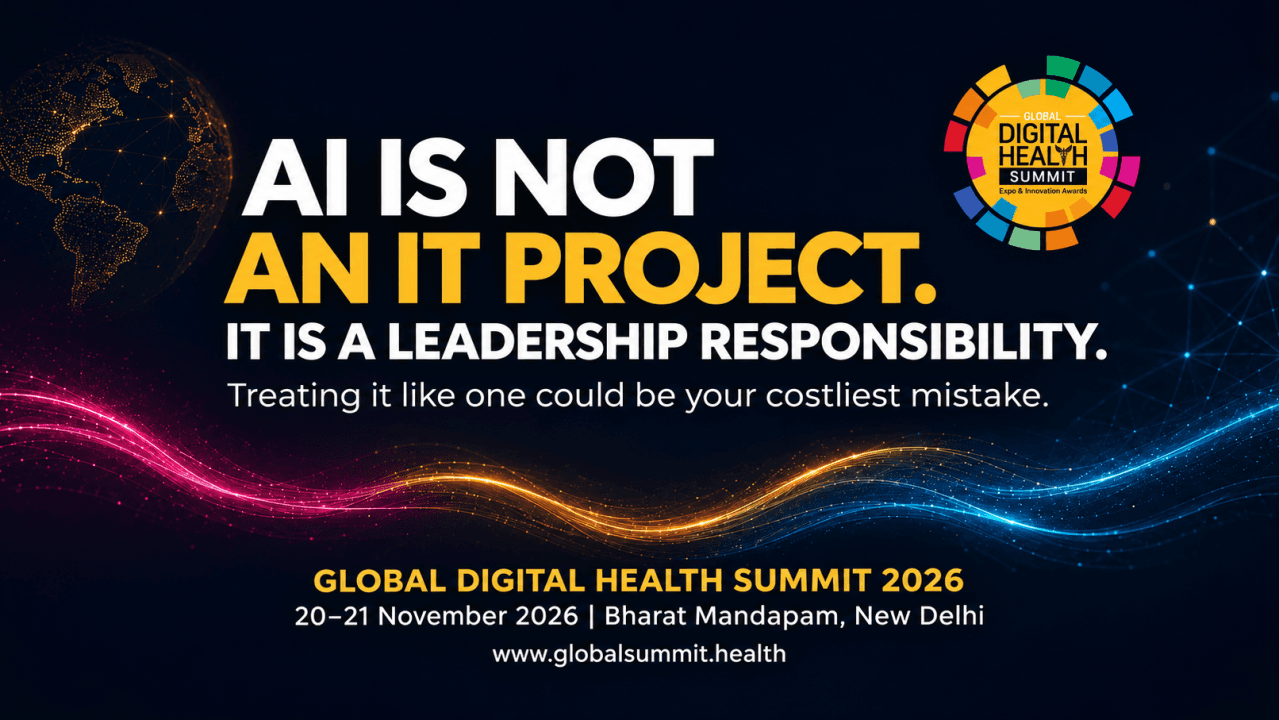
AI Is Not an IT Project. Treating It Like One May Be the Costliest Mistake Your Organisation Ever Makes.
Why assigning AI to the CIO alone is a strategic error, and what healthcare leaders must own before GDHS 2026.
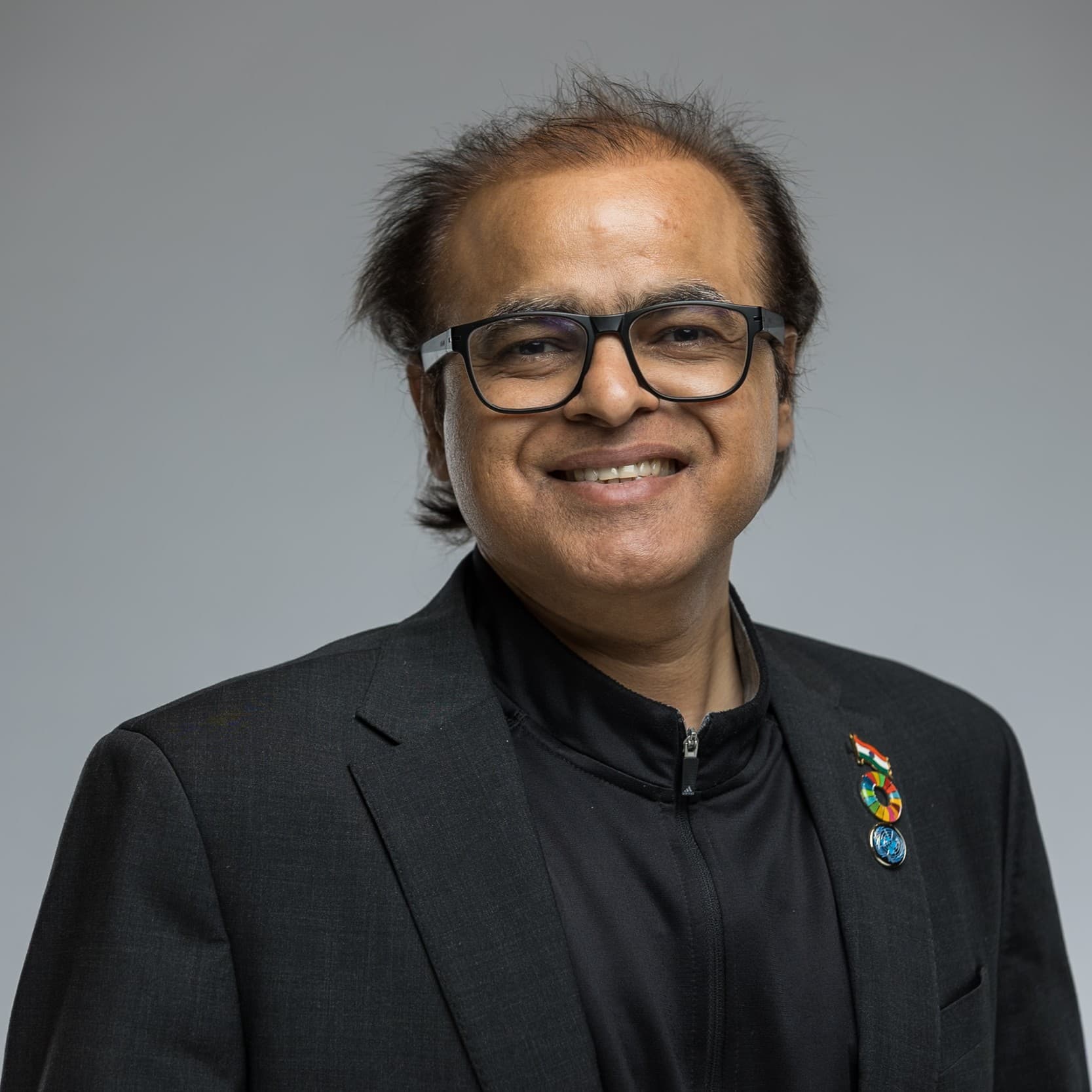
Dr. Rajendra Pratap Gupta
November 07, 20266 min read
In boardrooms around the world, I keep hearing a version of the same sentence: “Our CIO is looking into AI.” Or: “We’ll get to it in the next financial year.” Both statements reveal a dangerous misunderstanding. The first mistakes a transformation of the enterprise for a technology deployment. The second assumes that the pace of change will accommodate the organisation’s planning cycle.
Assigning AI to the CIO or CTO as another system to implement could become one of the most consequential strategic errors a leadership team makes. Technology leaders are indispensable to this transition. But they cannot, on their own, decide how an organisation should deliver care, develop its workforce, allocate capital or compete when intelligence becomes increasingly available on demand. Those decisions belong in the boardroom. Their consequences will reach every department, every professional and every patient.
ERP, EMR and cloud systems brought substantial organisational change. Yet their implementation generally centred on digitising, connecting or improving established activities. AI goes further: it can participate in the reasoning, communication and coordination through which those activities happen. That changes the questions leaders must ask. A hospital should examine more than how quickly a doctor can complete documentation. It should ask what becomes possible when clinicians can spend more time with patients, when follow-up becomes continuous, and when information from different encounters can inform the next decision. Redesigning the pathway could connect medication reconciliation, patient education, follow-up scheduling and escalation to a clinical team. The potential value lies in improving the entire transition from hospital to home. What is needed to achieve that level of AI integration. AI therefore requires a lot different level of understanding and thinking, and we are discussing that at GDHS.
The data is clear: value comes from leadership, not from tools
The preliminary MIT NANDA report, The GenAI Divide: State of AI in Business 2025, described a striking gap between widespread experimentation and measurable financial impact. Its findings pointed to difficulties integrating AI into organisational workflows and learning from operational feedback. The report’s much-publicised 95% figure should be read in that context, rather than treated as a universal failure rate for every AI pilot. The underlying warning remains compelling: access to powerful models does not automatically create business value.
McKinsey’s 2025 research reinforces this argument. Among 25 organisational, only 21% of respondents using generative AI said their organisations had fundamentally redesigned at least some workflows. CEO oversight of AI governance was also associated with greater financial impact, particularly in larger organisations. Only 28% reported CEO oversight, while 17% reported board oversight. These are associations, but they make leadership’s role difficult to dismiss. The implication is straightforward. Buying licences is relatively easy. Changing how an institution works requires leadership. The lecture from Rajat Gupta of McKinsey would clear the air about the leadership in AI Age.
“We have time” is the most expensive assumption in the room
Waiting can appear prudent. It can also conceal the assumption that an organisation will be able to buy its way into readiness once the technology matures, but delaying the foundations means beginning the learning process when competitors may already be benefiting from it.
METR’s 2025 research found that the length of software tasks frontier AI agents could complete at a 50% success rate had been doubling roughly every seven months. This is a specific benchmark finding, rather than a timetable for autonomous healthcare. Nevertheless, it illustrates how quickly capabilities can advance while institutional decisions move through annual planning cycles.
Healthcare is already experiencing that acceleration. NVIDIA’s State of AI in Healthcare and Life Sciences: 2026 Trends reported that 69% of respondents were using generative AI and large language models, up from 54% in the previous survey. These findings describe the survey’s respondents rather than every healthcare organisation, but they show substantial momentum across the sector.
The cost of delay will therefore extend beyond missed efficiency. It may appear in recruitment, patient confidence, organisational learning and the ability to offer services that people increasingly expect.
Your competitor, your patient and your workforce may all move before your committee reaches a decision.
What leaders must do now
Ownership must begin at the top. The CEO and board should take responsibility for delivery. Every significant initiative needs an accountable owner, a defined problem and a measurable outcome. “The AI team is handling it” is insufficient accountability for a change that affects the whole enterprise. This is the core discussion at www.globalsummit.health.
These are the leadership questions behind the Global Digital Health Summit 2026, taking place on 20–21 November at Bharat Mandapam, New Delhi.
With the theme “Implementing Artificial Intelligence – AI in Action,” the summit brings healthcare leaders closer to the practical decisions that implementation demands. The onsite Hospital of the Future experience and the CEOs’ Council for the Hospital of the Future create opportunities to examine how institutions could evolve—and what leaders must do to prepare.
The programme also includes the Clinic of the Future, a live clinical test involving senior doctors and AI with real patients, the Global AI Hub and the Technology Recommendation Council. These experiences should provoke serious questions about clinical reasoning, professional responsibility, patient trust and the conditions under which technology can improve care.
Come prepared to question what you see. Which capabilities could address a problem in your institution? What evidence would justify adoption? How would a deployment affect your workforce and operating model? What must change before it can deliver value?
The opportunity is to connect those questions with policymakers, health system CEOs, clinicians and innovators, and leave with clearer priorities for action.
The organisations that shape the next decade of healthcare will be those whose leaders translate emerging capabilities into better care, stronger institutions and greater public trust.
The question is whether your leadership will shape that transformation or spend the coming years responding to decisions made elsewhere.
I invite you to join us in New Delhi on 20–21 November. Bring your leadership team, your most pressing challenges and the questions your next board meeting needs to address.
Wish you Happy Diwali and a fabulous AI Driven Year Ahead
Dr. Rajendra Pratap Gupta, PhD
#GDHS2026 #AIinHealthcare #DigitalHealth #HealthcareLeadership #FutureOfHealth #AILeadership Health Parliament Global Digital Health Summit, Expo & Innovation Awards
Share this article
Pass it along to a colleague in healthcare or digital health.
Related articles
Keep exploring insights from GDHS.
Nov 01, 2026 · 5 min read
Discussion to a Decision - A Keynote at GDHS Could Trigger an Emergency Board Meeting
Insights that would force the industry to rewrite its strategy — why GDHS 2026 keynotes are designed to challenge hospital, pharma, MedTech and investor agendas.
Oct 20, 2026 · 5 min read
Where the Future Arrives First: Why GDHS Attracts the World's Most Unconventional Healthcare Leaders
From a robot panelist to Hospital of the Future and a 9.7/10 track record — why GDHS draws leaders who challenge the status quo, and why 2026 is its boldest edition yet.
Oct 17, 2026 · 9 min read
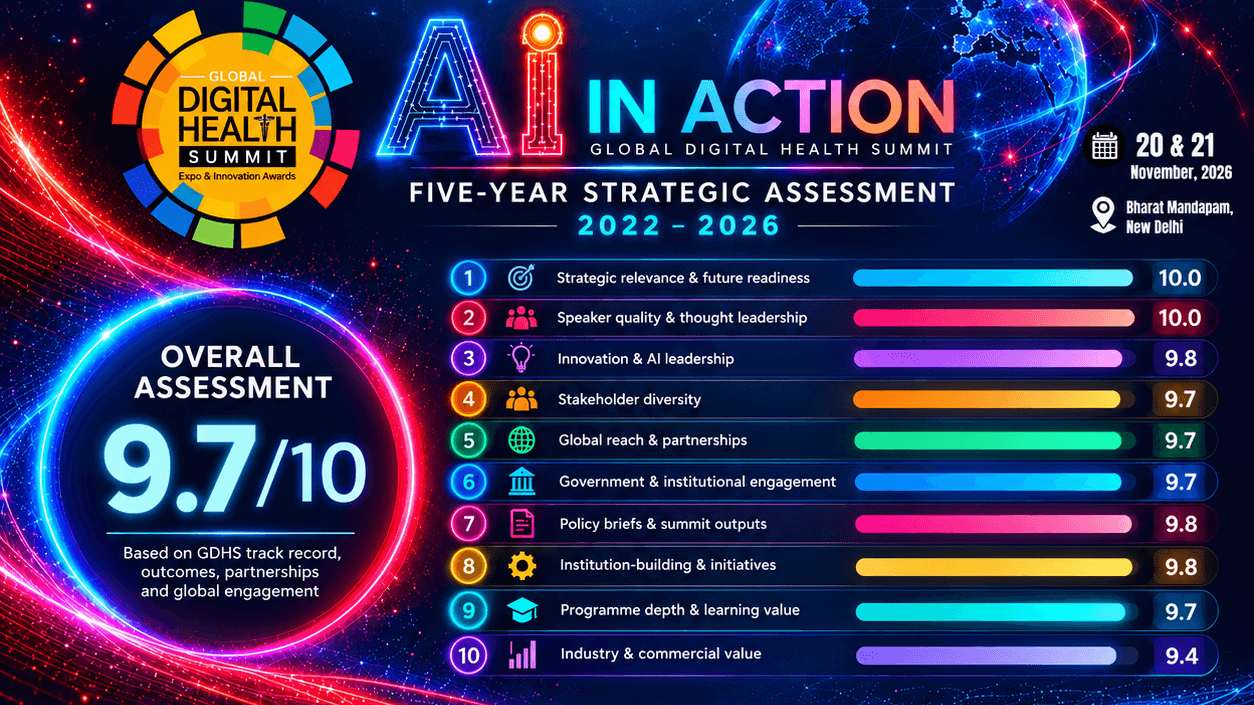
Why GDHS Scores 9.7/10? The Global Leaders Who Vouch for GDHS
An AI-based assessment scored GDHS 9.7/10 — and the stronger evidence is the ministers, regulators, UN and industry leaders who return year after year.
Oct 09, 2026 · 4 min read
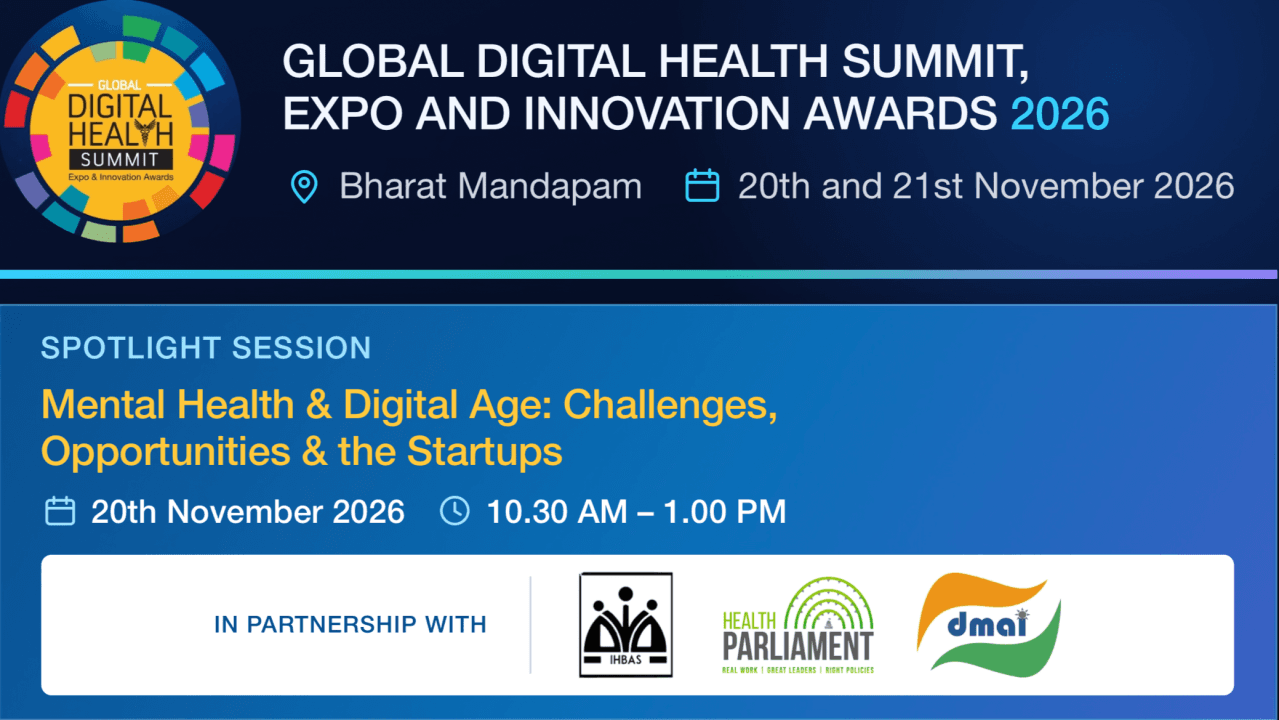
Are We Prepared for the Mental Health Emergency of the Digital Age? How can Start-ups help?
Why every healthcare CEO, pharmaceutical leader, policymaker, investor and technology innovator must rethink mental health before the digital revolution rewrites the human mind.