List of Recommended Health AI Technologies for 2026-2027. If Your Technology Deserves Adoption, Put It to the Test
How the GDHS 2026 Technology Recommendation Council evaluates health AI technologies for adoption, credibility and real-world implementation.
by Dr. Rajendra Pratap Gupta
August 25, 2026
6 min read
Is Your Technology Ready to Be Recommended for Adoption?
At GDHS 2026, the World Will Not Just See Innovation. It Will Decide What Deserves to Scale.
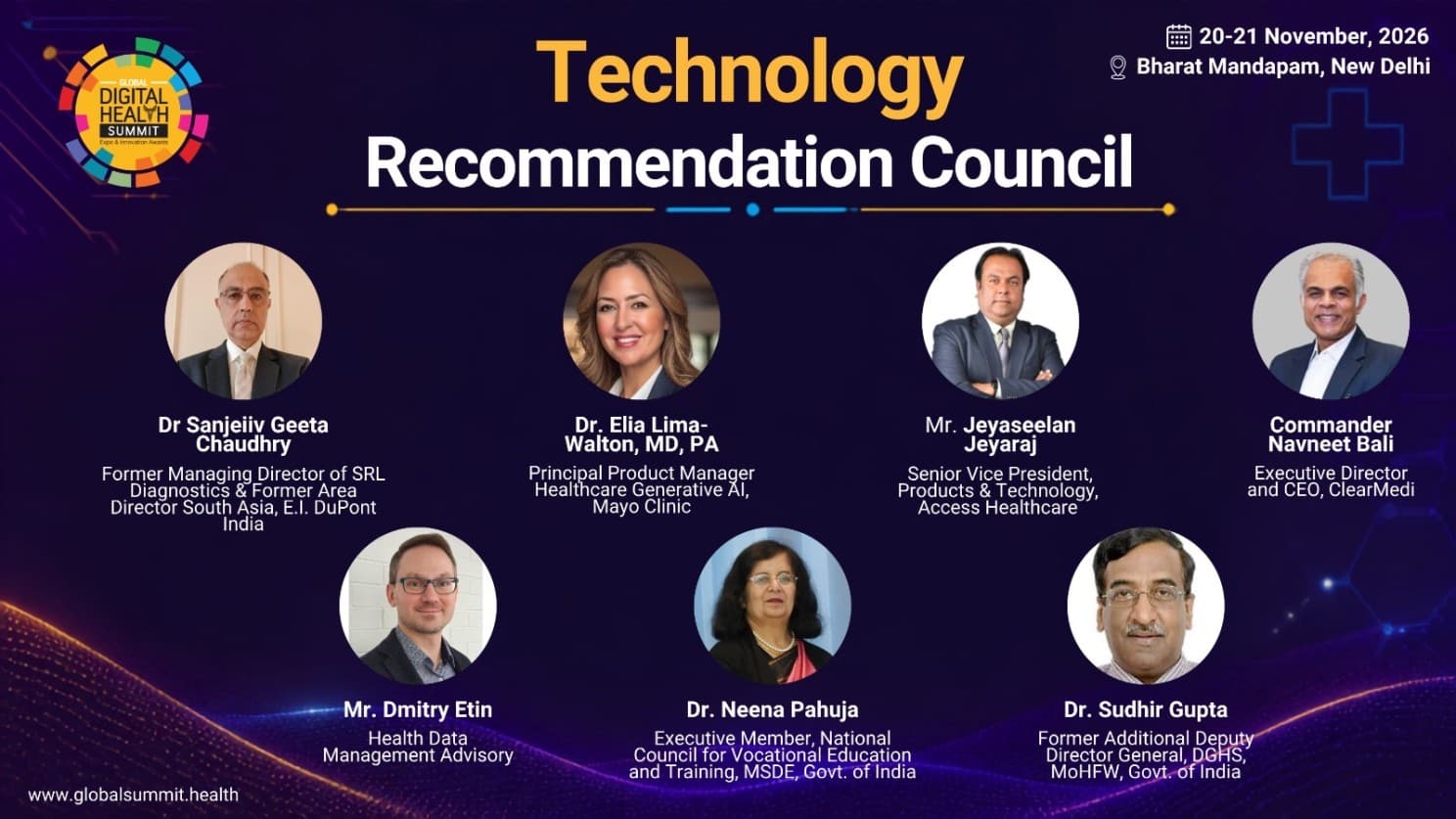
Every health technology company wants visibility, but in healthcare, visibility alone does not lead to adoption. The harder and more consequential question is whether an independent group of experienced healthcare leaders would consider your technology worthy of recommendation. At the Global Digital Health Summit 2026, being held on 20–21 November at Bharat Mandapam, New Delhi, we are introducing the Technology Recommendation Council - an independent assessment designed to evaluate promising digital health technologies through a structured process and identify solutions that merit recommendation. This changes the proposition of GDHS. Companies will not simply come to exhibit products; they will enter an environment where technologies can be seen, questioned, assessed and, where they meet the required standards, recommended.
From Exhibition to Evaluation
Healthcare has no shortage of awards, innovation showcases and pitch competitions. What the sector increasingly needs is credible filtering. Hospital CEOs, clinicians, health-system leaders and governments are approached by hundreds of technology companies, each promising better outcomes, lower costs, improved efficiency or transformational AI. Yet the questions that ultimately determine adoption are far more demanding: Does the technology demonstrate real clinical value? Is it secure and interoperable? Can it scale beyond a pilot? Is there credible evidence behind it? Can clinicians and patients actually use it effectively? And, most importantly, can it survive the realities of implementation inside complex healthcare systems? The Technology Recommendation Council has been conceived to bring structured scrutiny to precisely these questions.
Recommendation Will Have to Be Earned
Technologies participating at GDHS 2026 may be considered through a formal evaluation process covering areas such as clinical value, technology strength, evidence, scalability, usability and real-world readiness. The principle behind the Council is critical: participation will not automatically result in recommendation. Sponsorship cannot buy it, an exhibition booth cannot guarantee it, and a compelling presentation cannot substitute for evidence. The credibility of the initiative will depend precisely on the fact that a recommendation is earned after due assessment. If every technology were to receive one, the recommendation itself would have little meaning.
A Council That Understands Both Technology and Adoption
The Council brings together leaders with experience across healthcare delivery, diagnostics, government, technology, product development and health systems. It includes Dr Sanjeiiv Geeta Chaudhry, former Managing Director of SRL Diagnostics and former Area Director South Asia at E.I. DuPont India; Dr. Elia Lima-Walton, MD, PA, Principal Product Manager, Healthcare Generative AI at Mayo Clinic; Mr. Jeyaseelan Jeyaraj, Senior Vice President, Products & Technology at Access Healthcare; Commander Navneet Bali, Executive Director and CEO of ClearMedi; Mr. Dmitry Etin, Health Data Management Advisory; Dr. Neena Pahuja, former Executive Member, National Council for Vocational Education and Training, Ministry of Skill Development and Entrepreneurship, Government of India; and Dr. Sudhir Gupta, former Additional Deputy Director General, DGHS, Ministry of Health & Family Welfare, Government of India. Together, they represent an important intersection of people who understand not only how technologies are developed, but also why many promising solutions never move from demonstration to meaningful adoption.
In Healthcare, Trust Is the Real Currency
The biggest barrier facing health technology today is no longer invention; it is trust. A hospital CEO does not need another impressive demo. A clinician does not need another claim that AI will transform care. A policymaker cannot deploy technology across a health system merely because its presentation was compelling. Decision-makers need confidence that someone has already asked the difficult questions about evidence, safety, scalability, interoperability, usability and implementation. The Technology Recommendation Council is being designed to create that trusted signal. A technology emerging successfully from such a process could therefore carry something significantly more valuable than another trophy: an independent recommendation arising from structured scrutiny.
Why Missing GDHS 2026 Could Mean Missing the Adoption Conversation
This is why companies choosing to miss GDHS 2026 may be missing considerably more than another conference. They may be absent from a platform that is deliberately attempting to connect the entire journey from discovery and evaluation to credibility, decision-makers and ultimately adoption. Under the 2026 theme, Artificial Intelligence in Action, GDHS will focus on three defining areas-Hospital of the Future, Clinician of the Future and Pharma of the Future, and will bring together leaders who are no longer debating whether AI will reshape healthcare, but are deciding what to implement, whom to trust and which technologies deserve to scale.
The Difference Between Being Seen and Being Recommended
On 20–21 November 2026, many technologies will be visible at Bharat Mandapam. Some will demonstrate compelling capabilities, some will generate conversations, and some may progress through a structured evaluation process. A smaller number may emerge with something potentially far more consequential: a recommendation indicating that the technology deserves serious consideration for adoption. That distinction is fundamental. GDHS does not seek to create another ceremonial award programme; the ambition is to build a credible mechanism that can help healthcare decision-makers separate promising innovation from market noise.
If You Believe Your Technology Can Transform Healthcare, This Is Where It Should Be
The opportunity at GDHS 2026 is therefore not simply to exhibit before an audience. It is to place your technology in an ecosystem where serious healthcare leaders can discover it, examine it and, subject to a formal and independent process, potentially recommend it. For companies confident about the value, readiness and impact of what they have built, that is a very different proposition from buying visibility at another expo.
Global Digital Health Summit 2026 | 20–21 November 2026 | Bharat Mandapam, New Delhi | globalsummit.health
If your technology is genuinely worth adopting, GDHS 2026 may be where the world begins to take that claim seriously.
See you
Dr. Rajendra Pratap Gupta, PhD
#GlobalDigitalHealthSummit #GDHS2026 #ArtificialIntelligence #AIinHealthcare #DigitalHealth #HealthTech #HealthcareInnovation #HealthAI #FutureOfHealthcare #HospitalOfTheFuture #ClinicianOfTheFuture #PharmaOfTheFuture #HealthcareTransformation #DigitalTransformation #HealthInnovation #HealthcareTechnology #MedTech #HealthTechStartups #AIAdoption #HealthcareLeadership #HealthcareCEOs #ClinicalInnovation #TechnologyAdoption #InnovationToImpact #ScalingInnovation #BharatMandapam #NewDelhi #IndiaHealthTech
Share this article
Pass it along to a colleague in healthcare or digital health.
Related articles
Keep exploring insights from GDHS.
Oct 04, 2026 · 7 min read
I Didn't See It Coming So Soon: The Sentence That Will End Many Healthcare Careers
Dr. Rajendra Pratap Gupta examines how rapidly advancing AI could reshape healthcare roles and why leaders need to move from discussion to implementation.
Oct 01, 2026 · 3 min read
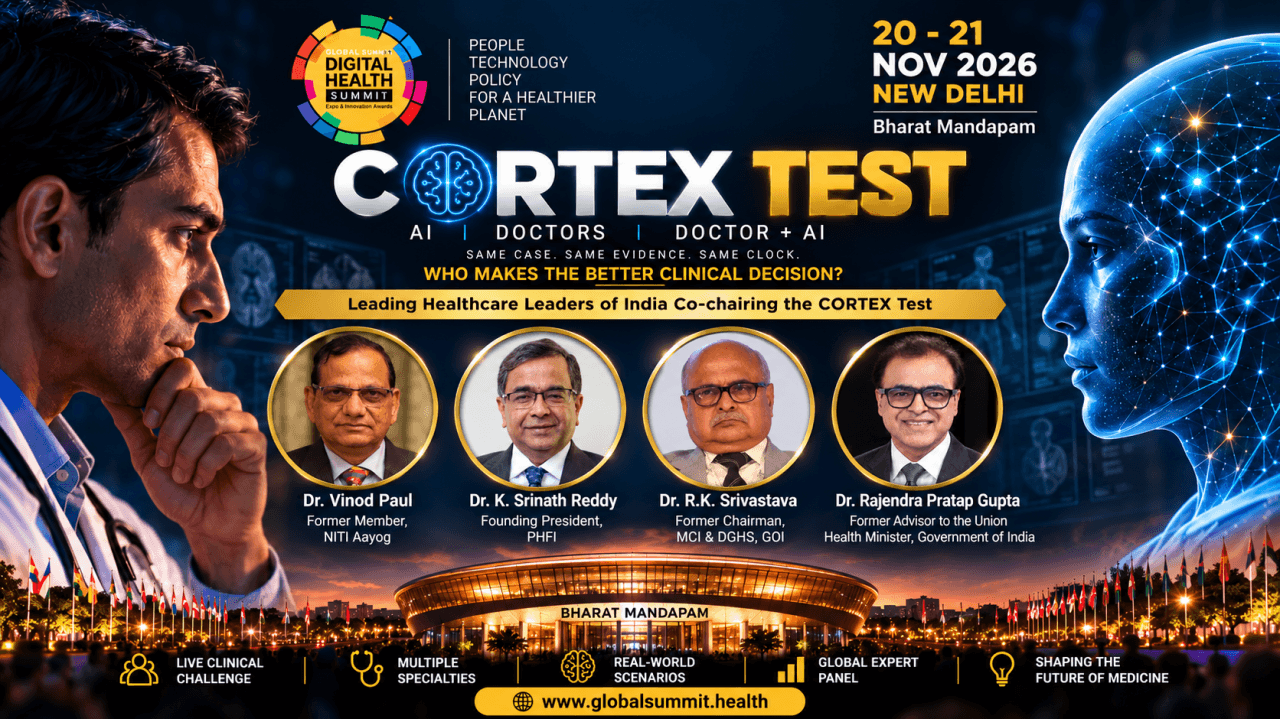
CORTEX TEST: The Day Medicine Puts AI on Trial
The CORTEX Test at GDHS 2026 compares AI, doctors and doctors using AI in a live clinical challenge across multiple specialties.
Sep 06, 2026 · 10 min read
Your Health AI May Be Brilliant. But Will the World Ever Find It?
Discover how the Global AI Hub and Technology Recommendation Council connect health AI innovators with customers, clinical experts and global partners.
Aug 30, 2026 · 8 min read
5X Registrations this year: This is the biggest summit focussed on ‘Implementing AI in Healthcare’
Why GDHS 2026 registrations are growing fivefold as healthcare leaders prepare to adopt AI through practical demonstrations and global expertise.