Two Power-Packed Days That Will Shape Healthcare in the Age of Artificial Intelligence
Explore the two-day GDHS 2026 agenda, from AI in clinical practice and the Hospital of the Future to healthcare leadership and implementation.
by Dr. Rajendra Pratap Gupta
August 15, 2026
12 min read
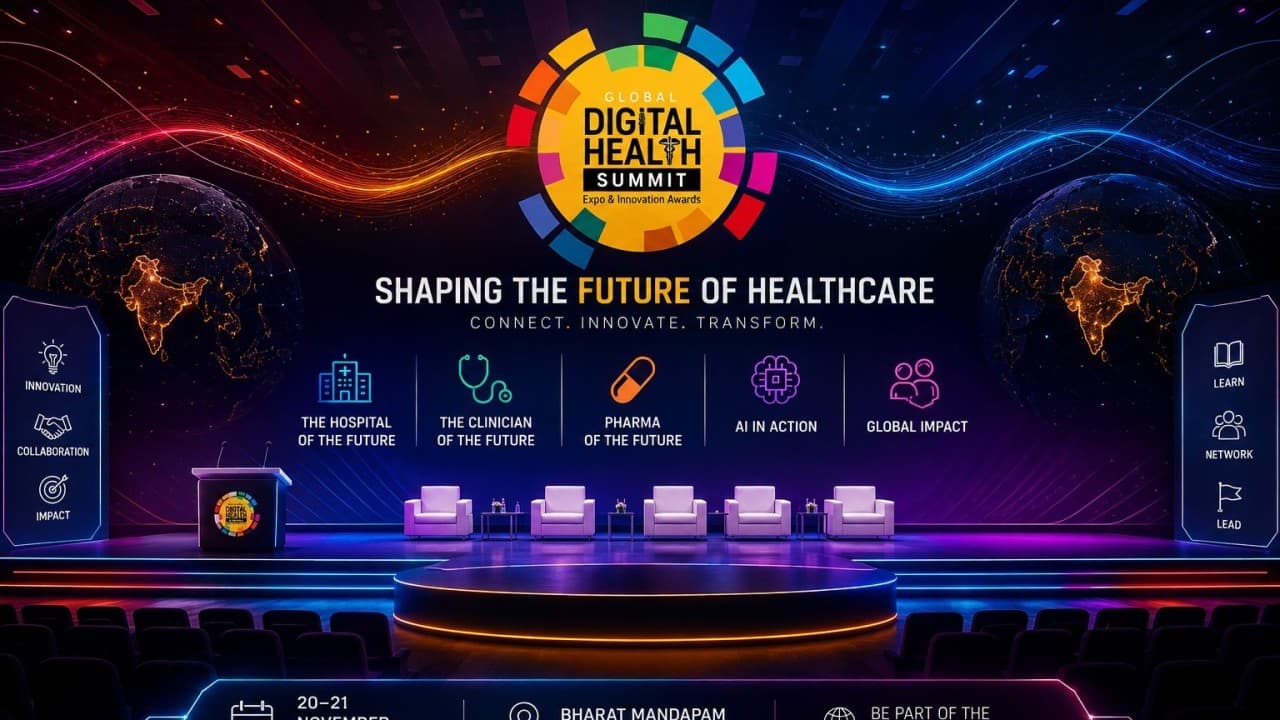
Global Digital Health Summit 2026 | 20–21 November 2026 | Bharat Mandapam, New Delhi
Two years ago, artificial intelligence was rarely discussed in healthcare boardrooms. Today, if AI is not on the board’s agenda, the organisation is already late. Patients are consulting AI before visiting doctors. Hospitals are redesigning care pathways. Pharmaceutical companies are accelerating discovery and engagement. Clinicians are confronting a future in which reputation alone may no longer guarantee relevance.
The Global Digital Health Summit 2026 begins from this uncomfortable but unavoidable reality.
Built around the theme “Artificial Intelligence in Action,” GDHS 2026 is not another conference where speakers will explain that AI is the future. Everyone knows that. The Summit has been designed to answer the more difficult question: What must healthcare leaders do now?
Across two strategically curated days, the people shaping healthcare, from patients and clinicians to hospital leaders, regulators, pharmaceutical executives, nurses, educators, innovators and policymakers, will come together to define what happens next.
Who Will Speak at GDHS 2026?
Not Commentators on Healthcare. The Real Doers of Healthcare.
The speakers at GDHS 2026 are not be people who merely observe change from the sidelines. They are the leaders who are building, regulating, financing, delivering and transforming healthcare across the world. We set the bar very high since the inception.
They will include global healthcare leaders, practising clinicians, hospital CEOs, pharmaceutical and medtech decision-makers, nursing leaders, regulators, policymakers, technology pioneers, researchers, educators, innovators, patients and investors. These are people who have implemented programmes, built institutions, shaped regulations, treated patients, created new technologies and taken responsibility for outcomes.
Every speaker is expected to bring more than an opinion. They will bring lived experience, what worked, what failed, what they learned and what healthcare organisations must do next.
At GDHS, the people on the stage are the people doing Real Work. The people in the audience will be those ready to act on it.
Day One: Healthcare Confronts Its New Reality
7:45 AM | The First Conversation Could Shape Your Next Collaboration
GDHS begins over a networking breakfast, but this is not routine networking. Imagine starting your morning beside a hospital leader redesigning an entire care system, a policymaker shaping the rules for healthcare AI, or an innovator looking for the right institution to deploy a breakthrough solution. At a gathering of this calibre, a conversation over breakfast could become your next partnership, investment, collaboration or career-defining opportunity.
9:00 AM | The Physician Meets the AI-Informed Patient
The Summit opens with examining the future of clinicians in the age of AI. The family doctor has traditionally been a patient’s first source of trusted medical guidance. But what happens when the patient consults an AI platform before entering the clinic? The physician of the future will not simply provide information; they will interpret, contextualise and humanise it. This keynote will explore how primary care must evolve, and why human judgement and trusted relationships may become even more important as machines become more intelligent.
9:30 AM | The Patient Has Already Changed. Has Healthcare?
The first major session turns the conventional conference model upside down by giving the stage to patients. Hosted by the International Patients’ Union , the conversation will reveal how real patients are already using AI to understand symptoms, compare treatments, prepare questions, evaluate providers and make decisions about care. For doctors, hospitals, pharmaceutical companies and medtech leaders, this will be an opportunity to hear an unfiltered account of what the AI-enabled patient now expects. Those expectations are changing faster than most healthcare organisations realise, and the institutions that fail to respond may discover that patients have quietly moved elsewhere.
11:00 AM | From Government to the Boardroom, and from the Boardroom to the Bedside
Only two years ago, AI was largely absent from healthcare boardroom discussions. Today, a board that is not asking about AI risks leaving its organisation unprepared for the most consequential transformation in modern healthcare. But discussion alone is not strategy. This session will follow AI’s journey from public policy to institutional leadership and finally to its impact at the bedside. It will examine what boards should ask, what management teams should prioritise and how ambitious presentations can be converted into safer care, better workflows and measurable outcomes.
12:00 PM | Can Professional Associations Prepare Their Members Before It Is Too Late?
For generations, medical and industry associations have helped their members remain professionally current. But the old model of periodic conferences and annual updates was not built for a world in which AI capabilities change every few weeks. This session will bring together medical and industry bodies to examine whether they are moving fast enough to prepare their members for new technologies, changing roles and emerging ethical responsibilities. The question is no longer whether professional roles will change. It is whether associations will lead that change, or explain it after it has already happened.
1:00 PM | Lunch, Live AI and a Glimpse of What Is Coming Next
As delegates gather for lunch prepared by leading chefs from the Maurya Sheraton, the Global AI Expo will offer a different kind of food for thought. Across the arena, delegates will encounter technologies that are defining the hospital of the future , clinicians of the future, pharma of the future and MedTech of the Future. A solution demonstrated during lunch may soon become part of a hospital’s workflow, a clinician’s decision-making process or a pharmaceutical company’s strategy. The Expo is where abstract conversations become visible, and where decision-makers can meet the people building the future. The Digital Health World Cafe is the place where CEOs meet for deal-making.
2:00 PM | The Last Mile of AI Will Be Led by Nurses and Allied Health Professionals
An AI strategy may be approved in the boardroom, but its success will be decided at the last point of care. Nurses and allied health professionals are present where technology meets the patient, making them indispensable to adoption, safety, trust and continuity. This session will explore how these professionals can move beyond being end-users of technology and assume stewardship roles in the AI era. It will also examine the new capabilities and leadership opportunities that could emerge for the largest and most essential segment of the healthcare workforce.
3:00 PM | Clinician of the Future: When Reputation Alone Is No Longer Enough
A clinician may have decades of experience and an extraordinary reputation, but AI is beginning to alter how patients understand expertise, seek second opinions and judge the quality of care. Hosted by the Academy of Digital Health Sciences, this session will confront what many professionals hesitate to discuss: how AI could reshape the clinician’s role, perceived value, remuneration and relationship with patients. Global leaders will help clinicians understand the capabilities they must develop now, not to compete with machines, but to become more effective, trusted and indispensable in an AI-enabled system.
4:30 PM | Medical Education Was Designed for Stability. AI Is Creating Weekly Reinvention.
Healthcare education has traditionally operated on long cycles. Curricula take years to revise, institutions take time to adapt and professionals often rely on knowledge acquired early in their careers. AI is overturning that model by introducing important developments every few weeks. Hosted by the Consortium of Innovative Healthcare Universities, this session will ask how universities, regulators and training institutions can prepare professionals for continuous disruption. The future will not belong to those who complete their education, but to those whose education never stops.
7:30 PM | When the Stage Closes, the Leadership Conversations Begin
Day One concludes with an invitation-only Leadership Dinner. Away from formal presentations, global leaders will have the space to explore collaborations, challenge ideas and discuss possibilities that cannot always be addressed onstage. Some of the Summit’s most important outcomes may begin here, with a candid conversation between two people who have the authority and determination to act.
Day Two: From Possibility to Implementation
9:00 AM | A Pioneer’s View of What Comes Next
Day Two opens with one of the world’s most respected leaders in digital health and a pioneer in the field . His keynote will look beyond today’s products to examine the future convergence of software, AI, regulation and care delivery. For hospital leaders, innovators, regulators and investors, this will be a chance to see the future through the experience of someone who has helped shape how the world understands and governs digital healthcare.
9:15 AM | The Future of Nursing Is the Future of Healthcare
Dr. T. Dileep Kumar will share his vision of how nursing and healthcare delivery must evolve. As care becomes more distributed, personalised, digital and continuous, nurses will become central to ensuring that innovation remains safe, equitable and human. This keynote will make the case that nursing must not be treated as an afterthought in digital transformation. It must be represented wherever healthcare strategy, technology and policy are being designed.
9:30 AM | Pharma of the Future: The Industry Is About to Be Rewritten
AI is beginning to influence every stage of the pharmaceutical lifecycle, from discovery and clinical trials to manufacturing, medical affairs, market access and patient engagement. The Pharma of the Future session will examine what this means for companies competing in a faster and more evidence-driven world. The real risk is not that AI will replace the pharmaceutical industry. It is that organisations using AI effectively could move so far ahead that slower companies struggle to recover.
11:00 AM | Two Hours of Global AI Success Stories and Perhaps Your Next Big Idea
For two focused hours, GDHS will move from theory to evidence. Leaders from across the world will present AI success stories that demonstrate what becomes possible when the right problem, technology, leadership and implementation strategy come together. Delegates will not only hear what succeeded; they will understand why it succeeded. Somewhere within these stories could be the inspiration for your next pilot, care model, investment or institutional transformation. Missing this session may mean learning months later that another organisation acted on the idea you should have taken home.
1:00 PM | Walk Through the Future Before It Arrives at Your Door
The Global AI Expo continues over lunch, allowing delegates to experience emerging solutions and speak directly with their creators. For hospital and pharma leaders, it is an opportunity to identify technologies worth evaluating. For innovators, it is a chance to be discovered by the people who can deploy their solutions. For investors and policymakers, it offers a close view of where healthcare innovation is heading and which ideas may be ready to move from promise to scale.
2:00 PM | Hospital of the Future: Do Not Build Tomorrow’s Hospital Around Yesterday’s Model
The hospital of the future will not simply be today’s hospital with more screens and software. Routine consultations may move beyond hospital walls, monitoring may become continuous and care could become increasingly predictive and personalised. This session will help delegates visualise how infrastructure, clinical workflows, workforce roles, revenue models and patient experiences may change. With live demonstrations in the Expo arena, the future hospital will not remain an abstract concept. It will become something delegates can see, question and begin planning for.
3:00 PM | Chronic Disease Management Moves from Episodic Treatment to Continuous Intelligence
Chronic disease management has traditionally depended on periodic consultations and delayed information. AI-enabled monitoring is creating the possibility of continuous engagement, earlier intervention and personalised care. Leaders building new chronic-care models will explain how these approaches can improve patient experience and outcomes while changing the economics of long-term care. For hospitals, clinicians, pharma companies and digital-health innovators, this session could transform how they understand and deliver chronic disease management.
4:00 PM | Recognising the Innovators Who Are Already Delivering Impact
The Global Digital Health Innovation Awards will celebrate the people and organisations moving healthcare from promise to practice. These awards will offer more than recognition; they will provide a window into the technologies, models and ideas that are already creating measurable change. Today’s award-winning innovation could become tomorrow’s standard of care.
5:30 PM | The Most Important Session: What Will You Do in the Next Few Months?
The final strategic session will bring the entire two-day journey together. After examining patients, clinicians, hospitals, pharma, nursing, education, data and successful implementation, the conversation will turn directly to the delegate. What skills must you develop? Which solutions should your organisation prioritise? Where should you invest? Which partnerships should you pursue? The objective is that no leader leaves GDHS with only a notebook of interesting observations. Delegates should leave with a clearer plan for the next few weeks and months, because in the age of AI, waiting for another year may be too long.
Who Should Be in the Room?
If you lead a hospital, GDHS could influence what you build, buy and redesign next. If you are a clinician, it could determine how you remain relevant and trusted. If you represent pharma or medtech, it could reveal where your next competitive advantage will emerge. If you are a nurse or allied health professional, it could open an entirely new leadership pathway. If you lead a university or professional association, it could change how you prepare the next generation. If you are a policymaker, innovator or investor, it will connect you with the real doers transforming healthcare across the globe.
You Can Read About the Transformation Later or Help Shape It Now
Many people will eventually hear about the ideas presented at GDHS 2026. They will hear about the highlights, download reports and follow the organisations that act first.
But only those in the room will experience the conversations as they happen. Only they will be able to question the leaders doing the work, see emerging solutions firsthand and build relationships with the people who can turn ideas into action.
By the time AI becomes unavoidable across healthcare, the advantage will already belong to those who prepared early. See you at the summit.
Dr. Rajendra Pratap Gupta, PhD
#artificialintelligence #ai #hospitals #clinicians #doctors #pharma #metech #NHA #ABHAid #healthcare
Share this article
Pass it along to a colleague in healthcare or digital health.
Related articles
Keep exploring insights from GDHS.
Oct 04, 2026 · 7 min read
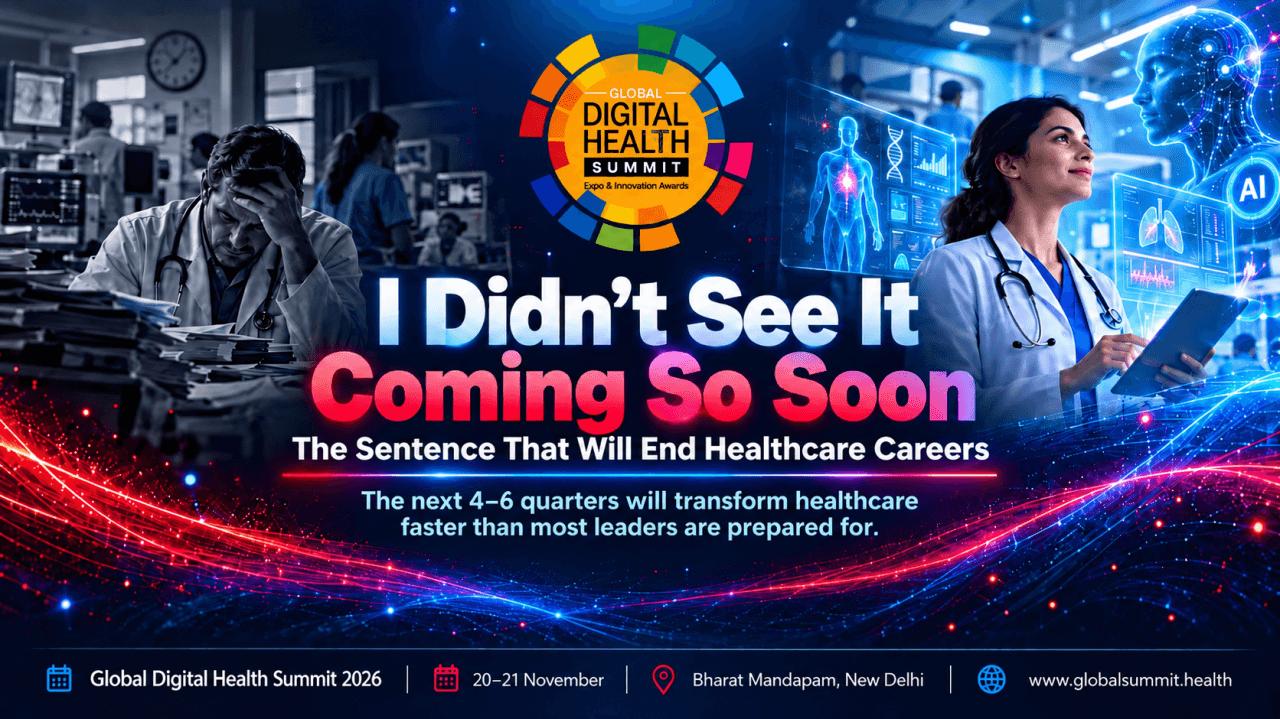
I Didn't See It Coming So Soon: The Sentence That Will End Many Healthcare Careers
Dr. Rajendra Pratap Gupta examines how rapidly advancing AI could reshape healthcare roles and why leaders need to move from discussion to implementation.
Oct 01, 2026 · 3 min read
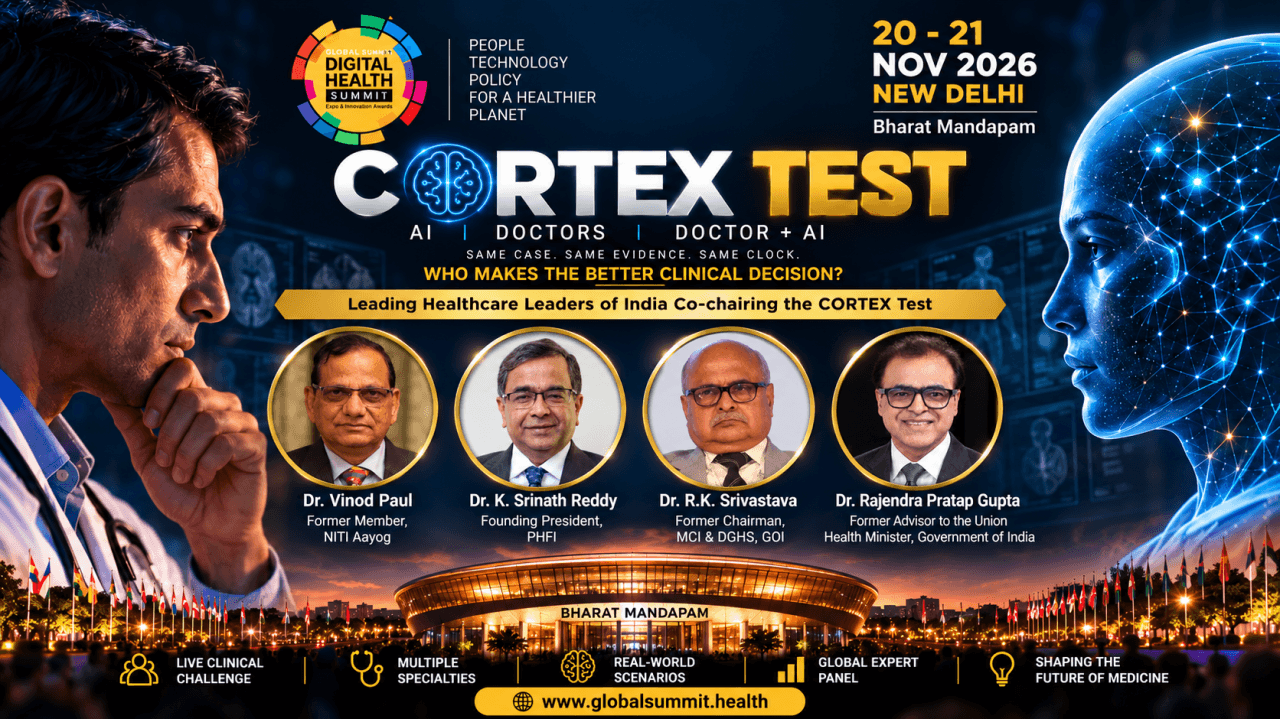
CORTEX TEST: The Day Medicine Puts AI on Trial
The CORTEX Test at GDHS 2026 compares AI, doctors and doctors using AI in a live clinical challenge across multiple specialties.
Sep 06, 2026 · 10 min read
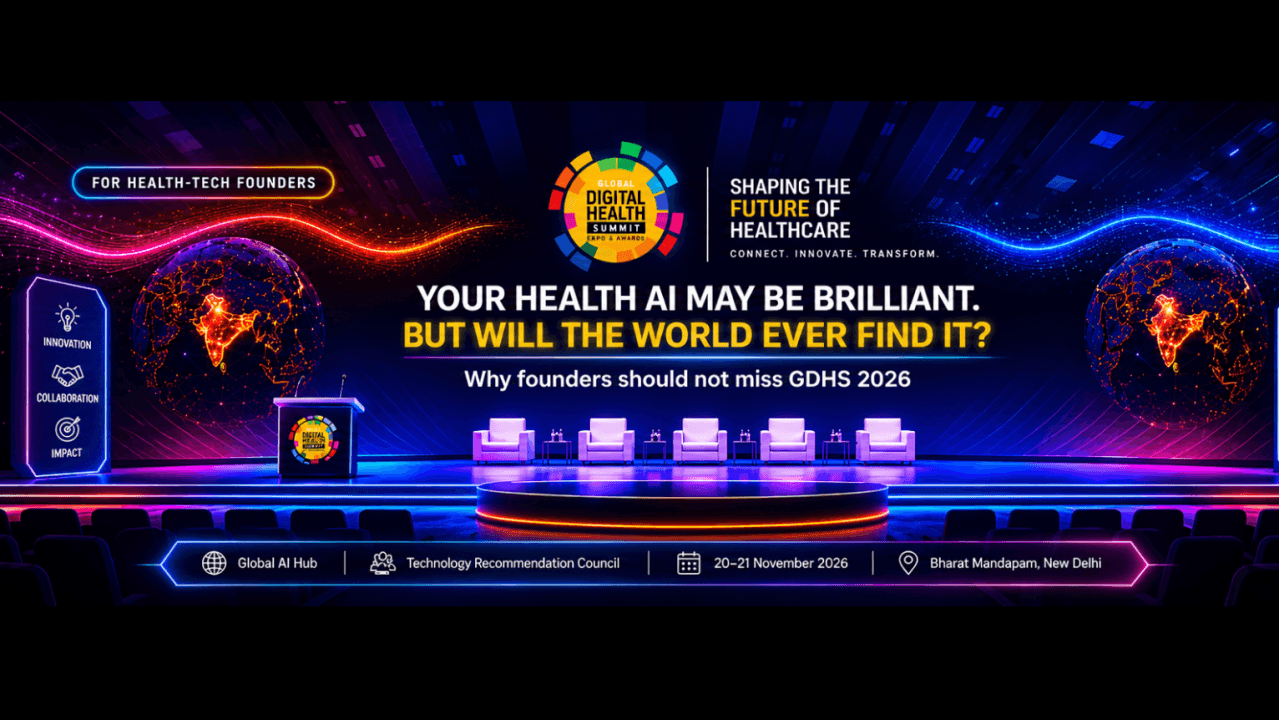
Your Health AI May Be Brilliant. But Will the World Ever Find It?
Discover how the Global AI Hub and Technology Recommendation Council connect health AI innovators with customers, clinical experts and global partners.
Aug 30, 2026 · 8 min read
5X Registrations this year: This is the biggest summit focussed on ‘Implementing AI in Healthcare’
Why GDHS 2026 registrations are growing fivefold as healthcare leaders prepare to adopt AI through practical demonstrations and global expertise.